What is a Tertiary Crusher?
A Tertiary Crusher is the final stage in the rock crushing process, designed to take the product from a secondary crusher and refine it into precisely shaped, cubical, fine-sized end products. While primary and secondary crushers are responsible for the initial coarse breaking of raw material, the tertiary crusher is the “finishing touch” that produces high-quality aggregates, manufactured sand, and other specific products required by industry standards.
Think of it as the difference between roughly chopping ingredients and finely dicing them for a gourmet meal. The tertiary crusher provides that final, precise cut.
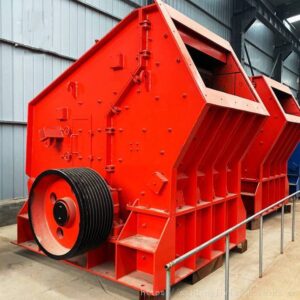
What Does a Tertiary Crusher Include? Common Types
The term “Tertiary Crusher” refers to the crusher’s role in the process, not a single machine type. Several types of crushers can serve in this tertiary capacity, each with its own strengths. The most common ones include:
Cone Crushers: Often used for hard and abrasive materials. They compress rock between a rotating mantle and a stationary concave liner (bowl). Cone crushers are renowned for producing well-shaped, cubical particles and are highly efficient.
Vertical Shaft Impactors (VSI Crushers): These crushers use a high-speed rotor to throw rock against a crushing chamber anvils or rock shelves. VSI crushers are exceptional for producing high-quality manufactured sand and finely shaped aggregates through “rock-on-rock” impact.
Horizontal Shaft Impactors (HSI Crushers): Similar to VSI crushers but with a horizontal rotor. They are versatile and can handle softer, less abrasive materials effectively in the tertiary stage.
Fine Roll Crushers: These use two counter-rotating cylinders to crush material through compression and shear. They are suitable for producing a uniform product with minimal fines from medium to hard materials.
What Materials Can a Tertiary Crusher Process?
Tertiary crushers are versatile and can process a wide range of materials, including:
Granite, Basalt, and Other Hard Rocks: To produce high-value concrete aggregate and railway ballast.
Limestone: For creating agricultural lime, asphalt sand, and specific construction aggregates.
Quartzite: For manufacturing high-quality sand and fine aggregates.
Recycled Concrete and Asphalt: To create a clean, cubical product for new construction projects.
Ore and Industrial Minerals: For further liberation of minerals in preparation for beneficiation processes.
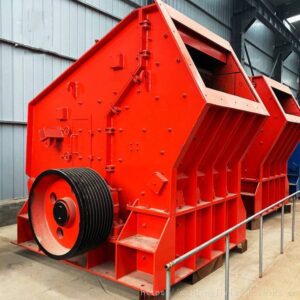
What Are the Feed Material Requirements for a Tertiary Crusher?
For optimal performance and longevity, the feed material for a tertiary crusher should meet certain criteria:
Correctly Sized Feed: The feed must already be pre-crushed by a secondary crusher. Typically, the feed size should be under 50-100mm, depending on the specific tertiary crusher model.
Consistent Feed Rate: A steady, controlled flow of material is crucial to prevent choking or uneven wear.
Limited Contaminants: The feed should be free from tramp metal, wood, or other uncrushable objects that could cause severe damage.
Appropriate Hardness and Abrasiveness: While tertiary crushers are built to be robust, the specific type chosen (e.g., cone for abrasive rock, VSI for less abrasive) must match the material’s properties.
How Does a Tertiary Crusher Work? The Operating Principle
The working principle depends on the type of crusher:
Cone Crusher Principle (Compression): Material is fed into the top of the crusher. It is compressed and crushed between the oscillating mantle and the stationary concave liners. The gap between the mantle and concave, known as the closed-side setting (CSS), determines the final product size.
VSI Crusher Principle (Impact and Attrition): Material is fed into the center of the crusher, where it enters a rapidly spinning rotor. The rotor accelerates the material and throws it against the stationary anvils or the rock-lined chamber walls. The resulting high-energy impacts cause the rock to break along its natural fissures, creating a well-shaped, cubical product. The “rock-on-rock” action also contributes to self-attrition, further refining the material.
Customized Tertiary Crusher Solutions for Your Specific Raw Materials
we understand that no two mining sites or quarries are the same. The “one-size-fits-all” approach does not work for tertiary crushing, where product shape and size are critical for profitability.
We provide fully customized tertiary crusher solutions tailored to your specific raw materials and production goals.
Our engineering process includes:
Material Analysis: We thoroughly analyze your raw material’s properties, including hardness, abrasiveness, moisture content, and desired final product specifications.
Crusher Type Selection: Based on the analysis, we recommend the optimal crusher type—be it a robust cone crusher for abrasive granite or a high-yield VSI for perfect manufactured sand from limestone.
Customized Configuration: We customize critical components like rotor speed, crushing chamber design, liner metallurgy, and machine settings to maximize efficiency and product quality for your material.
Performance Optimization: Our solutions are designed to deliver the highest yield of in-spec product, reduce wear part costs, and minimize energy consumption.
Whether you are processing hard and abrasive ores or softer recycled materials, we have the expertise to design and deliver a Tertiary Crusher that becomes the cornerstone of your profitable operation.
Contact us today for a free consultation and let us engineer the perfect final-stage crushing solution for you.