What is a Stone Jaw Crusher and Its Key Components?
Ever driven past a quarry or a large construction site and seen those massive, heavy-duty machines chewing up big boulders like they’re nothing? That’s likely a stone jaw crusher in action. It’s the workhorse of rock breaking, the go-to first step in turning massive chunks of raw material into usable aggregate. Think of it as a giant, mechanical pair of powerful jaws. One jaw is fixed and immovable, acting like an anvil, while the other jaw moves back and forth in a rocking motion. When you feed a large rock into the top opening (called the feed opening), the moving jaw powerfully crushes it against the fixed jaw until it’s small enough to fall through the gap at the bottom.
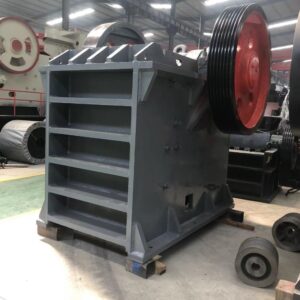
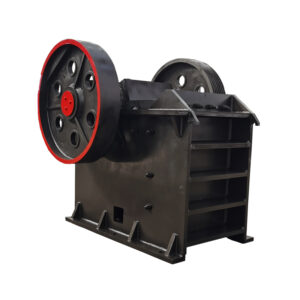
The main parts are built for a brutal job. The heavy-duty frame is the crusher’s backbone, taking all the stress. The fixed jaw plate and movable jaw plate (often called jaw dies) are the actual crushing surfaces, made from super tough manganese steel. A robust eccentric shaft drives the whole motion, and toggle plates act as a safety mechanism to protect the crusher from damage if something unbreakable gets in. The adjustment wedge system is crucial—it lets operators change the size of the bottom gap to control how fine or coarse the final product is.
Why Should You Care? Applications, Materials, and Output.
From your perspective, it’s all about what this machine can do for your project. Whether you’re in mining, quarrying, construction (for making concrete aggregate or road base), or even demolition recycling, a jaw crusher is your starting point. It’s designed to handle the toughest stuff: granite, basalt, river stone, limestone, concrete, asphalt, and other abrasive ores and rocks. It’s that first-stage brute force reduction.
You can expect it to crush material down to a range of sizes, typically between 150mm and 10mm (6″ to 0.4″), depending on the machine’s setting. The output capacity, or how much it produces per hour, varies massively based on the model and feed size. Smaller units for a recycling yard might produce 50-200 tons per hour, while the giants in a primary mining application can handle over 1,000 tons per hour. It’s key to match the crusher’s appetite with your project’s needs.
How It Works and Keeping It Running.
The principle is straightforward but effective—it’s all about compressive force. The motor drives the eccentric shaft, making the movable jaw move in an elliptical path. As it moves towards the fixed jaw, it squeezes and crushes the rock. When it moves back, the broken material drops down due to gravity, and fresh material from above takes its place for the next crushing cycle. It’s a reliable, cyclical “crush and release” action.
Operating it isn’t about fancy controls. First, you must ensure the feed material is within the crusher’s designed size limit—no over-sized boulders that can choke it. A consistent, steady feed from a loader or hopper is better than dumping a huge pile all at once. You’ll regularly check the discharge size and adjust the setting using the wedge system if needed. Listen to the machine; a change in sound can mean worn jaw plates or an issue. Routine greasing of bearings and visual checks for cracks or loose parts are part of the daily grind to avoid costly downtime.
What Makes It a Solid Investment? Key Features for You.
For anyone buying one, reliability and cost-effectiveness are king. These machines are built to last, with simple, robust designs that mean fewer things can go wrong. Their high crushing ratio is a major plus—they can take large rocks and reduce them significantly in a single pass, simplifying your whole crushing circuit. They’re also versatile; with different jaw plate profiles and settings, you can adapt the output for various needs. Maintenance is relatively straightforward; parts like jaw plates are accessible and designed to be replaced without a massive ordeal. While powerful, their energy consumption per ton of material crushed is often competitive, keeping your operating costs predictable. In short, it’s a low-fuss, high-uptime piece of core equipment.
Choosing the Right Jaw Crusher: Don't Guess, Assess.
Picking the wrong crusher is a headache you don’t need. Start by being brutally honest about your feed material. What’s the hardness, abrasiveness, and the maximum size of the rocks you’re feeding? Next, nail down your required final product size and your hourly or daily production targets. These three factors will point you to the needed feed opening size, crushing power, and model size.
Look beyond the price tag. Consider the total cost of ownership. A cheaper machine with less durable wear parts (like jaw plates) might cost you more in frequent replacements and downtime. Check the reputation of the manufacturer for support and parts availability—can you get a critical part in a week or in a month? Finally, think about site-specific factors: the available space for the crusher and how it will fit into your existing material flow (feeders, conveyors, etc.).
The End Product: What Do You Get After Crushing?
Once the jaw crusher has done its job, those useless boulders are transformed into valuable, saleable products. The output is typically a mix of sizes, from coarse rock (often called “crusher run” or “base material”) down to finer chips. This material is the literal foundation of construction. It’s used as a stable base layer under roads, buildings, and pavements (sub-base). It’s the key aggregate mixed with cement to make concrete. It’s used for drainage systems (rip-rap), landscaping, and as raw feed for further crushing into sand or finer aggregates in secondary crushers. In recycling, crushed concrete and asphalt are reused in new roads, closing the loop sustainably. The jaw crusher doesn’t just break rock; it creates the building blocks of modern infrastructure.