
Mobile vs stationary crushing plant
Table of Contents
Core Concept: The Fundamental Difference
Mobile Crushing Plant: A self-contained, wheeled or tracked unit that can be moved around a site or between sites. It is a “crushing station on the go.”
Stationary Crushing Plant: A fixed installation, typically built on a concrete foundation. It is designed for long-term operation at a single location. It’s a “permanent processing hub.”
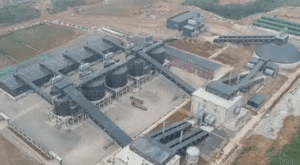
Detailed Comparison Table
| Feature | Mobile Crushing Plant | Stationary Crushing Plant |
|---|---|---|
| Mobility & Flexibility | High. Can be driven to the material source, reducing truck haulage. Ideal for multiple sites or moving within a large site. | None. Fixed location. Material must be transported to the plant. |
| Setup Time & Cost | Fast and low. Can be operational within hours or a few days. Minimal civil works (e.g., simple ground leveling). | Slow and high. Requires extensive civil engineering, concrete foundations, and structural steel, taking weeks or months. |
| Capital Investment | Lower initial cost. Often treated as an equipment expense. | Higher initial cost. Considered a capital project with significant infrastructure investment. |
| Production Capacity | Low to Medium. Generally suited for small to medium-scale projects. Throughput is limited by size and mobility. | High to Very High. Designed for large-scale, high-volume production over many years. |
| Flexibility & Scalability | High operational flexibility. Easy to relocate or reconfigure for different tasks. | Low operational flexibility, high scalability. The system is fixed, but can be designed with future expansion in mind (e.g., adding a secondary crusher). |
| Lifespan & Durability | Moderate. Subject to more wear and tear from moving and vibrations without a rigid foundation. | Long. Built on a solid foundation with robust structures, designed for decades of operation. |
| Operating Costs | Higher per ton in fuel/maintenance due to onboard engines and complex hydraulics. | Lower per ton for high volume. Connected to grid power (cheaper) and more efficient for large-scale processing. |
| Labor Requirements | Can be lower. Often controlled by a single operator via remote control. | Can be higher. May require fixed control room operators and more maintenance staff. |
| Environmental Impact | More noticeable. Generates its own noise and dust, which moves with the plant. | Easier to manage. Dust and noise can be controlled with permanent enclosures and systems. |
| Ideal Application | • Contract crushing • Short-term projects (1-3 years) • Multiple site locations • Sites with limited space for conveyors • Recycling and demolition on-site | • Large quarries and mines • Long-term projects (10+ years) • High-volume, consistent production • Greenfield projects where a permanent facility is justified |
Key Advantages of Each Type
Automation and Intelligent Control
Advantages of Mobile Crushing Plants:
On-Site Crushing: The biggest advantage. The crusher comes to the rock, dramatically reducing trucking costs and associated fuel, labor, and emissions.
Rapid Deployment: Get producing quickly, which is crucial for time-sensitive projects.
Versatility: Perfect for varied feed materials and changing locations, common in recycling (C&D waste) and contract crushing.
Compact Footprint: Requires less space as it doesn’t need a network of long, fixed conveyors.
Advantages of Stationary Crushing Plants:
High Efficiency & Throughput: Engineered for maximum output with optimized process flow (jaw -> cone -> VSI), leading to a lower cost per ton for high-volume applications.
Robustness and Reliability: Built for 24/7 operation with fewer moving parts related to mobility, resulting in higher availability and less downtime.
Lower Operating Cost: Connection to the electrical grid is far more cost-effective than running diesel engines for the same power.
Superior Process Control: Allows for more sophisticated and permanent systems for screening, washing, and dust suppression, ensuring consistent, high-quality end products.
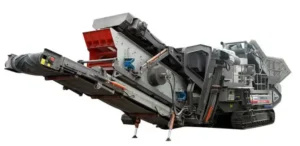
How We Can Tailor the Solution to Your Client's Requirements
The choice is not just about the machine, but about the client’s entire business case. Here are the key questions we should ask to guide them:
1. Project Timeline & Duration:
*If the project is short-term (under 3 years) or has multiple phases in different locations…* → A Mobile Plant is likely the best fit.
*If it’s a long-term quarry or mine with a 15+ year lifespan…* → A Stationary Plant is the more economical long-term investment.
2. Production Volume & Scale:
Is the target 200 tons per hour or 2,000 tons per hour? → Mobile plants excel at the lower end, while stationary plants dominate at the high end.
3. Site Geography & Logistics:
Is the site spread out, with the material source moving? → Mobile plant’s “move-to-the-material” advantage is key.
Is there a single, fixed pit with ample space for infrastructure? → A stationary plant can be optimally laid out for efficiency.
4. Budget Constraints:
Is the priority lower upfront capital? → Mobile plant.
Is the goal the lowest possible cost per ton over 10 years, regardless of initial outlay? → Stationary plant.
5. Material Type and Application:
Recycling, demolition, processing various materials? → The flexibility of a mobile plant is superior.
Processing a consistent, hard rock for asphalt or concrete aggregate? → The efficiency and product shape control of a stationary circuit is ideal.
6. Hybrid Solutions:
We can also offer creative solutions. For example, a semi-mobile plant on a modular skid can offer a middle ground. It requires some fixed infrastructure (like a feed hopper and conveyor) but allows the primary crusher to be relocated within the mine pit every few years to minimize truck haul distance.
Conclusion for the Client:
“There is no universally ‘better’ option. The right choice depends entirely on your specific operational and financial goals. Our role is to analyze your project’s duration, scale, budget, and material characteristics to recommend the most profitable and efficient solution for you. Let’s discuss your project in detail to build the perfect crushing setup for your needs.