mining cone crusher
What is a Mining Cone Crusher?
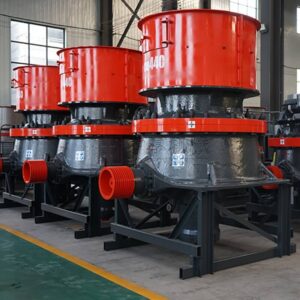
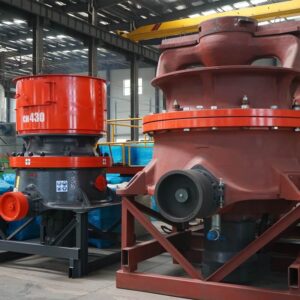
A mining cone crusher is a heavy-duty crushing machine designed to reduce large rocks and ores into smaller, uniform-sized particles. It is a critical component in mineral processing and aggregate production lines, known for its high efficiency, reliability, and ability to handle hard and abrasive materials. The machine features a conical crushing head that gyrates within a concave bowl, applying compressive force to break down materials.
Working Principle of a Mining Cone Crusher
The cone crusher operates on the principle of gyratory crushing. The main shaft, equipped with a crushing cone (mantle), gyrates eccentrically within a fixed concave bowl. As rocks enter the top of the crusher, they are compressed between the mantle and the concave. The continuous gyrating motion creates a squeezing and impacting action, breaking the materials into smaller pieces. The crushed product exits through the bottom opening (closed-side setting), which determines the output size. Hydraulic or spring systems provide overload protection and adjust the discharge gap
Materials Crushed by Mining Cone Crushers
Mining cone crushers are versatile and capable of processing a wide range of materials, including:
Hard Ores: Iron ore, copper ore, gold ore, manganese ore.
Abrasive Rocks: Granite, basalt, quartzite, sandstone.
Industrial Minerals: Limestone, dolomite, gypsum.
Recycled Materials: Concrete, asphalt (in secondary crushing stages).
They are ideal for medium to high-hardness materials with compressive strength up to 350 MPa.
Applications of Mining Cone Crushers
Mining cone crushers are widely used in:
Mining Operations: Primary, secondary, and tertiary crushing in open-pit and underground mines.
Aggregate Production: Crushing rocks for construction aggregates, road base, and railway ballast.
Quarrying: Processing large quarried stone into usable sizes.
Industrial Mineral Plants: Producing raw materials for cement, chemicals, and ceramics.
Recycling: Crushing demolition waste for reuse.
Advantages and Features of Mining Cone Crushers
High Efficiency: Advanced crushing chamber design ensures high productivity and low energy consumption.
Uniform Product Size: Precise control over the closed-side setting produces consistent, cubical particles.
Durability: Robust construction with high-quality steel and wear-resistant liners extends service life.
Automation Compatibility: Hydraulic adjustment and clearing systems allow remote control and automation integration.
Versatility: Suitable for various crushing stages (secondary, tertiary, quaternary).
Safety: Built-in overload protection prevents damage from tramp metal or uncrushable objects.
Comparison with Other Crushers
Jaw Crusher: Primarily used for primary crushing. Cone crushers offer finer output and higher capacity for secondary/tertiary stages.
Impact Crusher: Better for softer, less abrasive materials but wears faster on hard rocks. Cone crushers excel in hard, abrasive applications with lower wear costs.
Gyratory Crusher: Similar principle but larger and used for primary crushing in high-tonnage mines. Cone crushers are more compact for secondary crushing.
How to Use a Mining Cone Crusher
Proper Installation: Ensure a solid foundation, correct alignment, and adequate feeding equipment.
Regular Maintenance: Inspect wear parts (mantle, concave), lubrication systems, and hydraulic pressure weekly.
Optimal Feeding: Avoid overloading; use a feeder to ensure consistent and even material flow.
Monitor Performance: Track throughput, power draw, and product size to adjust settings as needed.
Safety First: Follow lockout/tagout procedures during maintenance and wear appropriate PPE.
How to Choose the Right Mining Cone Crusher
Material Properties: Consider hardness, abrasiveness, moisture content, and feed size.
Capacity Requirements: Determine required tons per hour (TPH) and final product specifications.
Crushing Stage: Select between secondary, tertiary, or quaternary crushers based on the process flow.
Brand and Quality: Choose reputable manufacturers with proven durability and after-sales support.
Cost of Ownership: Evaluate not only the purchase price but also maintenance, energy, and wear part costs.
Automation Needs: Consider crushers with smart controls for modern, automated plants.
How to Prepare an RFQ for a Mining Cone Crusher
When requesting a quote, include the following details:
Project Information: Site location, operating conditions (indoor/outdoor, temperature).
Material Specifications: Type, compressive strength, abrasion index, feed size, and desired product size.
Capacity Requirements: Target TPH and required product gradation.
Power Supply: Available voltage and frequency.
Preferred Features: Automation level, dust suppression, wear monitoring systems.
Service Expectations: Warranty period, spare parts availability, technical support.
Delivery and Logistics: Required timeline and destination port/site.
Conclusion
A mining cone crusher is a powerful and efficient solution for reducing hard and abrasive materials in mining and aggregate operations. Understanding its working principle, applications, and selection criteria ensures optimal performance and return on investment. When preparing an RFQ, providing comprehensive project details helps suppliers offer the most suitable equipment and competitive pricing.