What Are Jaw Crusher Machines?
A jaw crusher is a primary crushing machine designed to reduce large, hard materials into smaller pieces through mechanical pressure. It features two opposing jaws—one stationary and one movable—that create a V-shaped cavity where material is crushed. These robust machines are foundational in many material processing operations, offering reliability and efficiency in breaking down robust substances.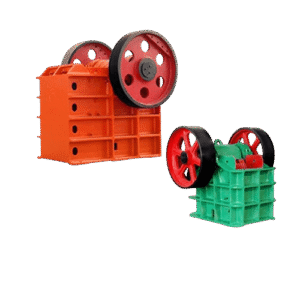
Primary Industries and Applications
Jaw crushers are extensively used across mining, construction, recycling, and aggregates industries. In mining, they process ores such as gold and iron; in construction, they crush demolition debris and concrete for reuse; and in aggregate production, they handle materials like granite and limestone to create gravel and sand.
Suitable Materials for Crushing
These machines excel at processing hard, abrasive, and medium-hard materials. Common examples include granite, basalt, quartz, concrete, bricks, and various minerals. They are less suited for very soft, elastic, or moist materials like clay, which may cause clogging.
Model Sizes and Production Capacities
Jaw crushers come in a range of sizes, typically categorized by feed opening dimensions (e.g., 500×750 mm, 750×1060 mm). Smaller models may produce 5–50 tons per hour, while larger industrial units can achieve 500–1,500 tons per hour. The output depends on factors like material hardness, feed size, and crusher settings.
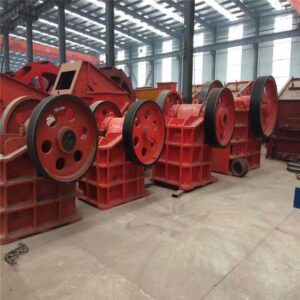
Working Principle and Component Functions
The machine operates on a simple compression mechanism. The movable jaw exerts force against the fixed jaw, crushing material trapped between them. Key components include:
Fixed Jaw Plate: Provides a solid surface for crushing.
Movable Jaw Plate: Applies pressure via an eccentric shaft.
Eccentric Shaft: Converts rotary motion into linear movement.
Toggle Plate: Acts as a safety mechanism to protect against overload.
Flywheel: Stores energy to ensure smooth operation.
Advantages Over Other Crushers
Compared to impact or cone crushers, jaw crushers offer lower operational costs, simpler maintenance, and greater durability for primary crushing. They handle larger feed sizes and are less sensitive to material moisture. However, they produce more dust and may require secondary crushing for finer outputs.
Material-Based Selection Guidelines
Users should consider material hardness, abrasiveness, required output size, and production volume. For hard rocks, choose crushers with manganese steel jaws; for high-capacity needs, opt for larger feed openings. Consulting with manufacturers for customized configurations is recommended.
Frequently Raised Questions (FRQ)
How often should jaw plates be replaced?
Wear depends on material abrasiveness—typically every 6–24 months with regular rotation.
Can it process recycled concrete?
Yes, but pre-removal of rebar is advised to prevent damage.
What maintenance is essential?
Regular lubrication, bolt tightening, and wear inspections.