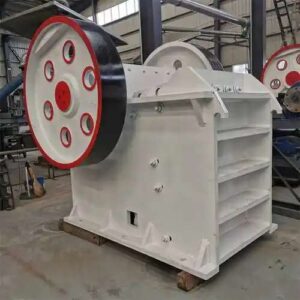
Jaw Crusher for Soft Rock
Table of Contents
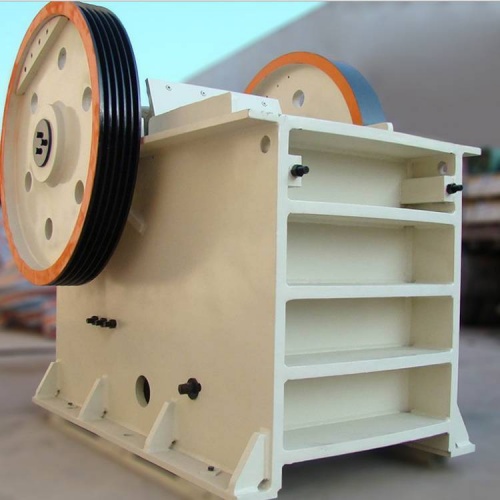
Jaw Crusher for Soft Rock supplier
What is a Jaw Crusher for Soft Rock?
A Jaw Crusher for Soft Rock is a primary crushing machine designed to break down relatively soft and medium-hard materials into smaller, manageable sizes. It uses compressive force generated between a fixed jaw plate and a moving jaw plate to crush rocks. Compared with crushers designed for very hard stone, soft rock jaw crushers are optimized for higher efficiency, lower wear, and smoother operation when processing materials with lower compressive strength.
These crushers are widely used in mining, quarrying, construction aggregates production, and recycling industries. They are especially suitable for the initial crushing stage where large soft rocks must be reduced to smaller sizes before further processing by secondary crushers.
What Types of Soft Rock Can a Jaw Crusher Process?
A Jaw Crusher for Soft Rock can process a wide range of materials that have relatively low hardness and compressive strength. These rocks are commonly found in construction and mining operations.
Typical soft rock materials include limestone, gypsum, shale, marl, sandstone, chalk, coal, and claystone. Some industrial minerals such as phosphate rock, talc ore, and certain types of salt rock can also be effectively crushed using a jaw crusher.
Because these materials are not extremely abrasive, jaw crushers can maintain stable performance and longer service life when processing them. This makes the machine a cost-effective solution for soft rock crushing projects.
Key Features and Advantages of Jaw Crusher for Soft Rock
Jaw crushers designed for soft rock crushing offer several important features that improve productivity and reduce operating costs. One of the main advantages is their simple structure, which makes maintenance easy and reduces downtime.
Another key feature is the adjustable discharge opening. This allows operators to control the final particle size according to production requirements. The machines are also known for their high crushing ratio, which means large rocks can be reduced to much smaller sizes in a single stage.
In addition, jaw crushers are durable and reliable. The heavy-duty frame, high-quality jaw plates, and optimized crushing chamber design allow the machine to operate continuously under demanding conditions. Energy consumption is relatively low compared with many other crushing technologies.
Working Principle of Jaw Crusher for Soft Rock
The working principle of a jaw crusher is relatively simple but highly effective. The machine consists mainly of a fixed jaw plate, a movable jaw plate, an eccentric shaft, a toggle plate, and a motor.
When the motor drives the eccentric shaft to rotate, the movable jaw moves back and forth relative to the fixed jaw. During the forward movement, the material inside the crushing chamber is compressed and crushed. When the movable jaw moves backward, the crushed material falls downward due to gravity and exits through the discharge opening.
This continuous cycle of compression and release ensures efficient crushing and consistent output size.
Common Models and Technical Parameters
Jaw crushers for soft rock are available in different models to meet various production capacities and feed sizes. The model selection usually depends on factors such as feed size, output size, and required capacity.
Common models include PE250×400, PE400×600, PE500×750, PE600×900, and PE750×1060. For example, the PE400×600 model typically has a feed opening of 400 mm by 600 mm and a capacity of around 15–60 tons per hour.
Larger models such as PE600×900 or PE750×1060 are capable of processing bigger rocks and achieving higher production capacity. These machines are often used in medium to large quarry operations.
How to Choose the Right Jaw Crusher for Soft Rock
Selecting the right jaw crusher requires careful consideration of several factors. First, the maximum feed size of the raw material must match the feed opening of the crusher. Oversized material may cause blockages or excessive wear.
Second, the required production capacity should be clearly defined. Choosing a machine with the appropriate capacity ensures efficient operation without unnecessary energy consumption.
Third, the final product size and downstream processing equipment should also be considered. The crusher’s discharge opening should be adjustable to meet the requirements of secondary crushing or screening equipment.
Finally, customers should also evaluate the manufacturer’s reputation, equipment quality, after-sales service, and availability of spare parts. A reliable supplier can provide long-term technical support and ensure stable production.
How to Choose the Right Jaw Crusher for Gravel?
When selecting a Jaw Crusher for gravel, customers should consider the following factors:
Type of Gravel: Understand the type and hardness of the gravel to ensure the crusher is suitable for the job.
Capacity: Choose a machine that can handle the required throughput for your operation.
Size of Output: Determine the required size of crushed gravel to ensure the machine can produce the desired product.
Power Consumption: Look for a model that is energy efficient, as this will reduce long-term operating costs.
Maintenance and Spare Parts: Consider the ease of maintenance and the availability of spare parts for the machine.
Frequently Asked Questions (FAQs) about Jaw Crushers for Gravel
How long will a Jaw Crusher for gravel last?
A well-maintained Jaw Crusher can last for many years, often 10 to 20 years or more, depending on usage and maintenance.What is the capacity of a Jaw Crusher for gravel?
The capacity varies depending on the model and size, but typically ranges from 5 tons per hour to 100 tons per hour.What is the typical output size of gravel produced by a Jaw Crusher?
The typical output size can range from 1 inch (25 mm) to 4 inches (100 mm), depending on the settings.Is a Jaw Crusher for gravel suitable for other materials?
Yes, a Jaw Crusher can also crush other materials such as rocks, ores, and aggregates.
Related Articles