What is a Compound Cone Crusher?
A Compound Cone Crusher, also known as a Symons Cone Crusher or simply a compound crusher, is a versatile crushing machine designed for secondary, tertiary, and quaternary crushing stages. It combines the crushing principles of both compression and impact to reduce the size of rocks and ores.
Its name “compound” refers to its integration of mechanical, hydraulic, and electrical systems to achieve higher efficiency and more automated control compared to traditional spring cone crushers.
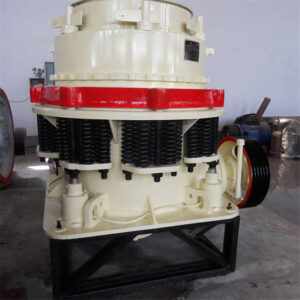
Key Benefits of the Compound Cone Crusher
Why do so many operations choose the Compound Cone Crusher? The benefits are clear and impactful:
High Efficiency and Productivity: Optimized crushing cavity design and high speed allow for greater throughput and superior reduction ratios.
Excellent Particle Shape: It produces well-shaped, cubicle end products, which is highly desirable for concrete and asphalt applications.
Reliability and Durability: Built with a robust frame and high-quality components, it is designed to withstand the harshest operating conditions with minimal downtime.
Hydraulic Adjustment and Protection: Advanced hydraulic systems allow operators to adjust the discharge setting easily and provide overload protection to prevent damage from tramp metal or uncrushable material.
Versatility: With interchangeable crushing cavities and adjustable settings, it can be adapted to a wide range of applications, from hard abrasive stones to softer ores.
How Does a Compound Cone Crusher Work? Understanding the Principle
The working principle is based on a combination of compression and impact within a continuously operating chamber.
Feeding: Rock material is fed into the top of the crusher through the feed hopper.
Crushing: The material falls onto the rotating mantle, which gyrates within a stationary concave (bowl liner). This gyratory motion, driven by an eccentric bushing, creates a compressive force that crushes the rock against the concave.
Compression and Impact: As the mantle gyrates, it repeatedly squeezes and impacts the rock particles against the concave liners, breaking them down into smaller sizes.
Discharge: The crushed material continues down the crushing chamber, becoming progressively smaller, until it is small enough to pass through the gap between the mantle and concave at the bottom, exiting as the final product.
The hydraulic system controls the crusher’s setting and provides a safety mechanism by allowing the mantle to lift slightly if an uncrushable object enters the chamber.
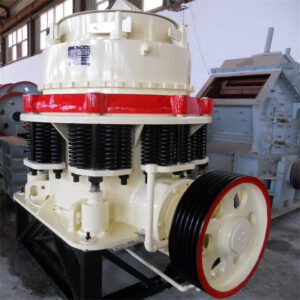
Advantages Over Other Cone Crushers
While all cone crushers are effective, the Compound Cone Crusher holds distinct advantages over other types, such as Spring Cone Crushers and single-cylinder hydraulic cone crushers.
Ideal Crusher Plant Configuration: What Machines Can It Be Paired With?
A Compound Cone Crusher is rarely used alone. It shines as part of a complete crushing circuit. Here are the most common machine pairings:
Primary Jaw Crusher: The classic setup. A Jaw Crusher performs the primary crushing of large rocks, and the Compound Cone Crusher takes the output for secondary fine crushing.
Primary Gyratory Crusher: In large-scale mining operations, a gyratory crusher handles the primary duty, feeding a coarse product to the compound cone for further reduction.
Vibrating Feeder & Screen: A feeder ensures a consistent and regulated flow of material into the crusher. Screens (like a vibrating screen) are used before (pre-screening) and after (closed-circuit crushing) the cone crusher to improve efficiency and product quality.
Other Cone Crushers or Impact Crushers: For producing specific product gradations, it can be used in sequence with other crushers for tertiary or quaternary crushing stages.
We Provide High-Quality Compound Cone Crushers for Your Success
Choosing the right crushing equipment is critical to your project’s profitability and longevity. We are your trusted partner for reliable and high-performance crushing solutions.
We can provide you with a robust Compound Cone Crusher tailored to your specific needs, whether you are in mining, quarrying, or aggregate production. Our crushers are engineered for maximum productivity, ease of maintenance, and long service life, ensuring you get the best return on your investment.
Contact us today to discuss your requirements. Let our experts help you select the perfect Compound Cone Crusher to optimize your crushing circuit and boost your productivity.