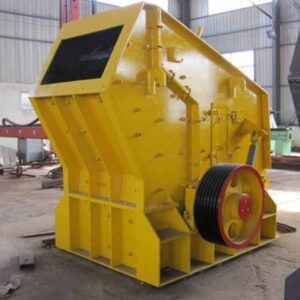
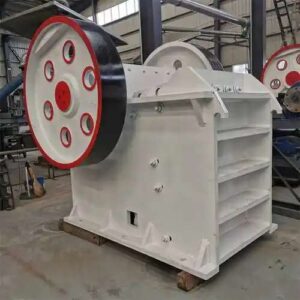
What is a Cast Iron Jaw Crusher
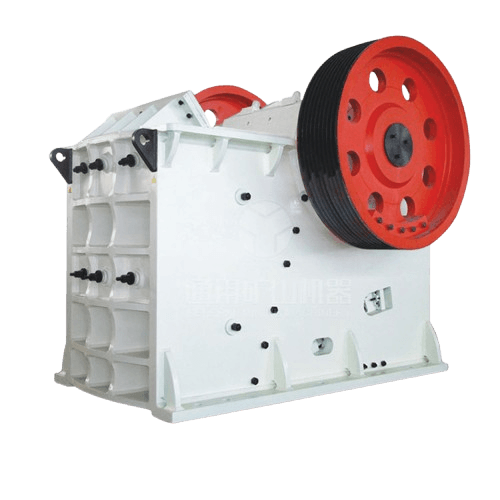
A Cast Iron Jaw Crusher is a type of primary crushing equipment built with high-strength cast iron components, especially for the frame and key structural parts. Compared with standard welded steel crushers, the cast iron structure provides better rigidity, vibration resistance, and durability under heavy-duty working conditions.
It is widely used in mining, quarrying, construction, and recycling industries where reliable coarse crushing is required. The machine is designed to handle large feed sizes and reduce them into manageable sizes for further processing.
What Materials Can a Cast Iron Jaw Crusher Crush
This type of jaw crusher is suitable for a wide range of hard and abrasive materials, including:
- Granite
- Basalt
- Limestone
- River stone
- Iron ore
- Copper ore
- Quartz
- Construction waste (concrete, bricks)
- Slag and metallurgical waste
Its robust structure allows it to handle high compressive strength materials without deformation.
Advantages Compared to Other Jaw Crushers
Compared with traditional welded jaw crushers, Cast Iron Jaw Crushers offer several practical advantages:
- Stronger structure: Casting reduces internal stress and improves stability
- Longer service life: Less prone to fatigue cracking
- Better vibration absorption: Ensures smoother operation
- Lower maintenance frequency: More durable under continuous load
- Higher reliability in harsh environments
These advantages make them especially suitable for heavy-duty and continuous production lines.
Key Features and Benefits
- Heavy-duty cast iron frame for maximum durability
- Deep crushing chamber for higher efficiency
- Large feed opening and high reduction ratio
- Adjustable discharge size
- Simple structure and easy maintenance
- Strong adaptability to different materials
These features ensure consistent performance and lower operational costs.
Working Principle of Cast Iron Jaw Crusher
The working principle is based on compression crushing:
- The motor drives the eccentric shaft through a belt and pulley
- The movable jaw moves back and forth against the fixed jaw
- Material is crushed when compressed between the two jaws
- Crushed material is discharged from the bottom opening
The cast iron frame ensures stable operation even under high impact loads.
Suitable Equipment Pairing
A Cast Iron Jaw Crusher is usually used as a primary crusher and can be combined with:
- Secondary jaw crushers
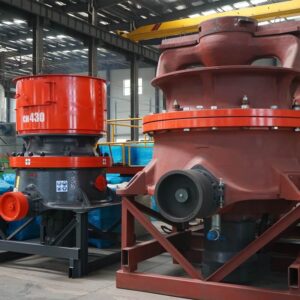
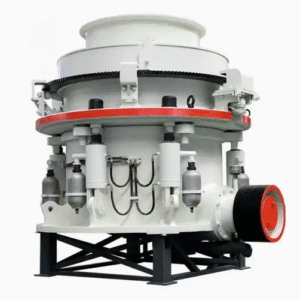
- Cone crushers
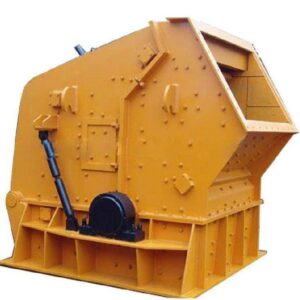
- Impact crushers
- Vibrating feeders
- Vibrating screens
- Belt conveyors
This combination forms a complete crushing and screening production line.
How to Choose the Right Cast Iron Jaw Crusher
When selecting a suitable model, customers should consider:
- Feed size and material hardness
- Required capacity (t/h)
- Final product size
- Production line configuration
- Budget and operating cost
- Site conditions (space, power supply)
Choosing the right configuration ensures efficiency and avoids over-investment.
Cast Iron Jaw Crusher Models and Parameters
| Model | Feed Opening (mm) | Max Feed Size (mm) | Capacity (t/h) | Motor Power (kW) | Weight (t) |
|---|
| CIJC-250×400 | 250×400 | 210 | 5–20 | 15 | 2.8 |
| CIJC-400×600 | 400×600 | 340 | 16–60 | 30 | 6.5 |
| CIJC-500×750 | 500×750 | 425 | 40–110 | 55 | 11 |
| CIJC-600×900 | 600×900 | 500 | 60–160 | 75 | 17 |
| CIJC-750×1060 | 750×1060 | 630 | 110–320 | 110 | 29 |
Our After-Sales Service
We understand that equipment reliability is critical to your business. Our after-sales service includes:
- Professional installation and commissioning support
- Operator training for safe and efficient use
- Full supply of spare parts
- Regular maintenance guidance
- 24/7 technical support
- Remote diagnosis and on-site service if needed
Our goal is to ensure your production runs smoothly with minimal downtime.