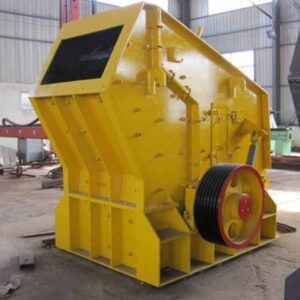
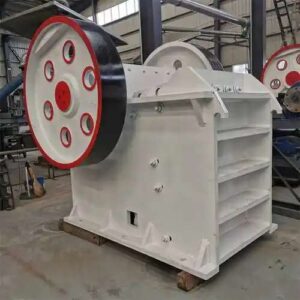
What is a Jaw Crusher in Aggregates?
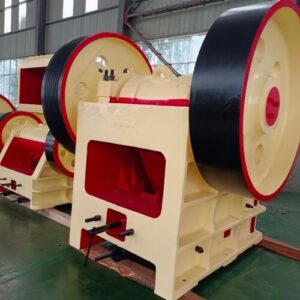
A Jaw Crusher is a primary crushing machine used in aggregate production to break large rocks into smaller, manageable sizes. It operates on the principle of compressive force, using two jaws—one fixed and one movable—to crush materials. In the aggregates industry, jaw crushers are essential for producing high-quality gravel, sand, and crushed stone for construction, road building, and other applications.
Types of Jaw Crushers
Jaw crushers come in various designs, each suited to specific crushing needs:
Single Toggle Jaw Crusher
The movable jaw moves in an elliptical motion, applying pressure to crush materials.
Advantages: simple structure, lower cost, easier maintenance.
Double Toggle Jaw Crusher
Two toggle plates control the jaw motion, providing a more powerful crushing force.
Advantages: suitable for very hard or abrasive materials, high crushing efficiency.
Compact or Mini Jaw Crusher
Designed for small-scale or laboratory applications.
Advantages: portable, low energy consumption, ideal for small aggregate plants.
Materials Jaw Crushers Can Crush
Jaw crushers are versatile and can handle a wide range of aggregate materials:
Role of Jaw Crushers in Aggregate Production
In an aggregate production line, jaw crushers serve as the primary crusher, performing the following roles:
Primary size reduction: Break large rocks into smaller pieces suitable for secondary crushers or directly for aggregate production.
Preparation for downstream processing: Jaw crushers reduce material to sizes manageable for cone crushers, impact crushers, or sand-making machines.
Ensuring consistent feed: A steady output ensures smooth operation of the entire aggregate production line.
Jaw Crusher Models and Specifications
| Model | Feed Opening (mm) | Capacity (t/h) | Motor Power (kW) | Max. Feed Size (mm) | Discharge Size (mm) |
|---|
| JC-400 | 400×600 | 20-50 | 22 | 350 | 50-100 |
| JC-600 | 600×900 | 50-120 | 55 | 500 | 75-150 |
| JC-750 | 750×1060 | 100-200 | 110 | 600 | 100-200 |
| JC-900 | 900×1200 | 150-300 | 160 | 700 | 150-250 |
| JC-1200 | 1200×1500 | 250-500 | 250 | 1000 | 200-300 |
Features and Advantages of Jaw Crushers in Aggregates
High crushing efficiency: Capable of handling hard and abrasive materials.
Durability: Heavy-duty frame and jaw plates withstand continuous operation.
Adjustable output size: Easily adjusts to produce the desired aggregate size.
Low maintenance cost: Simple design reduces wear and maintenance downtime.
Energy saving: Efficient motor usage reduces operational costs.
Versatility: Suitable for different crushing applications in aggregate, mining, and construction industries.
How to Choose a Jaw Crusher for Aggregates
Consider the material hardness: Harder stones like granite may require a double-toggle jaw crusher.
Determine required output capacity: Match crusher capacity with production goals.
Evaluate feed size: Ensure the crusher can handle the largest expected rock size.
Check space and installation requirements: Consider plant layout and mobility needs.
Assess maintenance and operational costs: Factor in energy consumption, wear parts, and ease of maintenance.
Services We Provide for Jaw Crushers in Aggregates
We offer a full range of customer-oriented services:
Consultation: Guidance on selecting the right jaw crusher model based on material type, capacity, and production line layout.
Customized solutions: Tailored designs for aggregate plants to maximize efficiency.
Delivery and installation: Full support from factory to site, including equipment installation.
Commissioning: On-site testing to ensure proper operation and optimal performance.
After-sales support: Spare parts supply, technical troubleshooting, and maintenance training.
RFQ Requirements for Jaw Crushers
When requesting a Quotation (RFQ), clients should provide:
Material type and hardness (e.g., limestone, granite, recycled concrete).
Maximum feed size and desired output size.
Required production capacity (t/h).
Crusher type preference (single-toggle, double-toggle).
Power supply specifications.
Site conditions (installation space, environmental factors).
Additional requirements (mobility, automation, maintenance support).
Providing detailed information ensures accurate quotes and customized solutions.
Related Articles
PE Jaw Crusher FAQ
1. What is the service life of jaw plates?
It depends on the material hardness and working hours. High manganese steel plates can last several months under normal conditions.
2. How to adjust the discharge size?
The discharge opening can be adjusted by changing the toggle plate or using the adjustment device.
3. Can PE jaw crusher be used in a mobile crushing plant?
Yes, it can be mounted on a mobile chassis for flexible operation.
4. What is the delivery time?
Normally 15–30 days depending on the model and customization requirements.
If you are looking for a reliable and cost-effective primary crushing solution, the PE Jaw Crusher remains a proven choice in the global mining and aggregate industry.