
Jaw Crusher for Hard Rock
Table of Contents
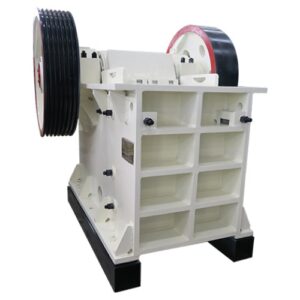
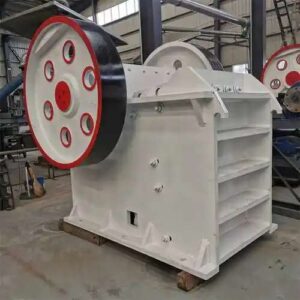
Jaw Crusher for Hard Rock machine
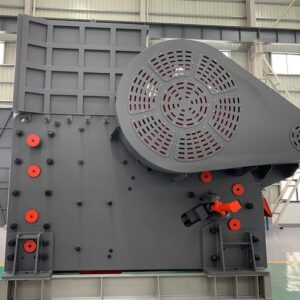
Jaw Crusher for Hard Rock supplier
Jaw Crusher for Hard Rock: The Complete Guide for Mining and Quarry Applications
In the mining and aggregate industry, crushing hard rock is one of the most demanding tasks. Materials such as granite, basalt, quartzite, and iron ore require robust equipment with high compression strength and long service life. A Jaw Crusher for Hard Rock is specifically engineered to handle these challenging materials efficiently and reliably.
If you are working in mining, quarrying, construction aggregate production, or recycling, understanding how a hard rock jaw crusher works—and how to choose the right model—can directly impact your productivity and operating cost.
What Is a Jaw Crusher for Hard Rock?
A jaw crusher for hard rock is a heavy-duty primary crushing machine designed to break high-compression-strength materials (generally 200–350 MPa or higher). Unlike light-duty crushers used for soft limestone or recycling materials, hard rock jaw crushers feature:
Reinforced frame structure
High manganese steel jaw plates
Large eccentric shaft
Strong bearing system
Powerful motor configuration
They are typically used as primary crushers in mining and aggregate production lines before secondary crushers like cone crushers or impact crushers.
What Types of Hard Rock Can It Crush?
A hard rock jaw crusher is suitable for a wide range of materials, including:
Granite
Basalt
Quartzite
Gabbro
River stone
Iron ore
Copper ore
Gold ore
Manganese ore
Dolerite
Trap rock
These rocks usually have high abrasiveness and compressive strength, which require strong crushing force and wear-resistant components.
Working Principle of Jaw Crusher for Hard Rock
The working principle is based on compression crushing.
The motor drives the belt and pulley.
The eccentric shaft rotates, causing the movable jaw to move back and forth.
Material enters the crushing chamber from the top.
The movable jaw presses the material against the fixed jaw.
The rock is crushed through compression and discharged from the bottom once it reaches the required size.
The crushing chamber is usually designed in a deep V-shape to ensure higher feed capacity and better crushing efficiency.
Key technical components include:
Fixed jaw plate
Movable jaw plate
Eccentric shaft
Toggle plate
Bearings
Flywheel
The flywheel helps balance the load and reduce vibration during operation.
Features and Advantages of Jaw Crusher for Hard Rock
1. Strong Crushing Capacity
Designed for high compressive strength materials up to 350 MPa.
2. High Efficiency
Optimized cavity design improves throughput and reduces material blockage.
3. Durable Wear Parts
Jaw plates made of high manganese steel (Mn13, Mn18, Mn22) or alloy materials extend service life.
4. Stable Operation
Heavy-duty frame and high-quality bearings ensure long-term continuous operation.
5. Adjustable Discharge Size
The discharge opening can be adjusted to meet different output requirements.
6. Low Operating Cost
Simple structure reduces maintenance time and replacement cost.
7. Wide Application
Suitable for mining, quarrying, metallurgy, construction materials, road construction, and recycling.
Common Models and Technical Parameters
Below are typical jaw crusher models used for hard rock crushing:
| Model | Feed Opening (mm) | Max Feed Size (mm) | Capacity (t/h) | Motor Power (kW) | Weight (t) |
|---|---|---|---|---|---|
| PE400×600 | 400×600 | 340 | 16–64 | 30 | 7 |
| PE500×750 | 500×750 | 425 | 40–110 | 55 | 12 |
| PE600×900 | 600×900 | 500 | 50–160 | 75 | 17 |
| PE750×1060 | 750×1060 | 630 | 110–320 | 110 | 29 |
| PE900×1200 | 900×1200 | 750 | 220–450 | 132 | 50 |
| PE1200×1500 | 1200×1500 | 1020 | 400–800 | 160–220 | 100 |
(Parameters may vary depending on manufacturer and configuration.)
For high-capacity mining projects, European-type jaw crushers (C-series) are also widely used.
How to Choose the Right Jaw Crusher for Hard Rock
Selecting the correct jaw crusher is critical. Here are the key factors:
1. Material Type
What rock are you crushing? Granite and basalt require stronger wear parts than limestone.
2. Maximum Feed Size
Measure the largest rock entering the crusher to determine the feed opening size.
3. Required Capacity
How many tons per hour do you need? Choose a model that matches your production target.
4. Final Product Size
The discharge opening adjustment range should meet your downstream requirements.
5. Working Environment
Mining site or quarry? Fixed plant or mobile crushing station?
6. Budget and Operating Cost
Consider initial investment, wear parts cost, power consumption, and maintenance expenses.
7. After-Sales Service
Spare parts availability and technical support are very important for hard rock applications.
Professional manufacturers usually offer customized solutions based on your crushing line configuration.
Jaw Crusher for Hard Rock – FAQ
Q1: What is the maximum compressive strength it can handle?
Most heavy-duty jaw crushers can handle materials up to 350 MPa.
Q2: Is a jaw crusher suitable for secondary crushing?
Generally, jaw crushers are used for primary crushing. For secondary crushing, cone crushers are recommended.
Q3: How often should jaw plates be replaced?
It depends on material hardness and production volume. For granite and basalt, replacement may be needed every 1–3 months in high-output plants.
Q4: Can it be used in a mobile crushing plant?
Yes. Jaw crushers are widely used in mobile crushing stations for mining and construction projects.
Q5: What affects the production capacity?
Material hardness
Feed size
Discharge opening setting
Moisture content
Operator management
Related Articles
PE Jaw Crusher FAQ
1. What is the service life of jaw plates?
It depends on the material hardness and working hours. High manganese steel plates can last several months under normal conditions.
2. How to adjust the discharge size?
The discharge opening can be adjusted by changing the toggle plate or using the adjustment device.
3. Can PE jaw crusher be used in a mobile crushing plant?
Yes, it can be mounted on a mobile chassis for flexible operation.
4. What is the delivery time?
Normally 15–30 days depending on the model and customization requirements.
If you are looking for a reliable and cost-effective primary crushing solution, the PE Jaw Crusher remains a proven choice in the global mining and aggregate industry.