mining impact crusher
The Essential Guide to Mining Impact Crushers: A Practical Overview for Buyers
In the rugged world of mineral extraction and aggregate processing, selecting the right crushing equipment is pivotal for operational efficiency and cost management. Among the various options, the Mining Impact Crusher stands out as a versatile and powerful workhorse. This guide cuts through the marketing jargon to deliver a straightforward, practical look at what these machines are, how they work, and what you need to know before investing in one.
What is a Mining Impact Crusher?
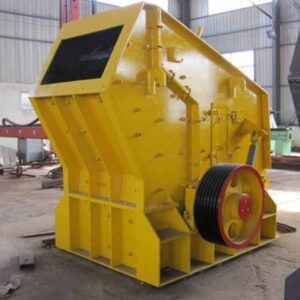
Simply put, a mining impact crusher is a heavy-duty machine designed to break down large rocks, ores, and minerals by slinging them against hard surfaces or other rocks at high speed. Unlike crushers that rely on pressure alone (like jaw or cone crushers), impact crushers use the principle of—as the name suggests—impact to achieve size reduction. This method is exceptionally effective for producing a uniform, cubical product, which is highly desirable in many mining and construction applications.
How Does It Work? The Principle of Impact Crushing
The core action is surprisingly direct. Material is fed into the crusher and encounters a high-speed rotor fitted with hammers or blow bars. This rotor violently throws the material against the impact aprons or plates (also called breaker plates) lining the crusher’s interior. The shattering force breaks the rocks. Further reduction occurs as the material ricochets back into the path of the rotor’s hammers or collides with other incoming rocks in the crushing chamber (a secondary effect known as “rock-on-rock” crushing in some models). The adjustable gap between the rotor and the aprons, along with the rotor speed, controls the final product size.
Core Structure: Built to Take a Beating
A mining impact crusher is engineered for durability. Its main structural components include:
Rotor Assembly: The heart of the machine. A heavy, solid steel rotor shaft fitted with mounting discs to hold the blow bars.
Blow Bars: The primary wear parts that strike the material. They are reversible or replaceable.
Impact Aprons / Liners: Stationary plates that form the crushing chamber. Their position is adjustable to control product grading.
Hydraulic or Mechanical Adjustment System: Allows for quick setting changes without stopping the crusher.
Rigid Weldment Housing: The main frame, built from thick steel plate to withstand constant shock loads.
Drive System: Typically consists of electric motors connected to the rotor via V-belts or direct drive couplings.
What Materials Can It Crush?
Mining impact crushers are not universal; they excel with medium-hard to hard, non-abrasive, or low-abrasive materials. They are a popular choice for:
Limestone, dolomite, and other sedimentary rocks
Recycled concrete and asphalt (in aggregate recycling)
Coal
Some softer iron ores
Phosphate rock
Gypsum
It’s important to note that they are generally less suited for very hard, highly abrasive materials like granite, quartzite, or certain metallic ores, where compression crushers (like cone crushers) offer better wear life.
Integrating into Your Crushing Circuit: How It Works with Other Crushers
Impact crushers rarely work in isolation. Their role is defined by their position in the crushing circuit:
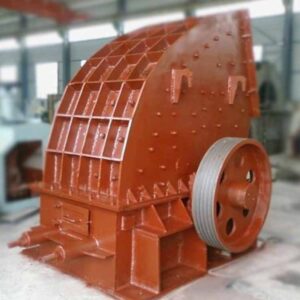
Primary Duty: Large, horizontal shaft impactors (HSI) can serve as primary crushers for soft to medium-hard feed, directly accepting material from the mine face.
Secondary Crushing: This is their most common role. They receive pre-crushed material (e.g., from a jaw crusher) and refine it further, creating a well-shaped final product.
Tertiary / Quaternary Duty: Vertical Shaft Impactors (VSI), a type of impact crusher, are often used in these final stages for precise shaping (“cubicity”) and sand manufacturing. A typical flow might be: Jaw Crusher (Primary) → Cone Crusher (Secondary) → Mining Impact Crusher (Tertiary/Shaping).
Key Wear Parts: Planning for Maintenance
Be prepared to manage and inventory these consumables:
Blow Bars: The fastest-wearing component. Their lifespan depends entirely on the material’s abrasiveness.
Impact Aprons / Liners: Wear plates that line the crushing chamber.
Rotor Tips and Guards: Protect the rotor assembly itself from wear.
Rotor Shaft & Bearings: While not “wear parts” per se, they are critical components subject to immense stress.
A Buyer's Checklist: How to Choose the Right One
Don’t just buy a model number. Ask these questions:
Feed Material: What is the hardness, abrasiveness, and moisture content? Get a crushability analysis.
Required Capacity (TPH): What’s your target tons per hour?
Input & Output Size: What is the maximum feed size, and what product gradations do you need?
Application Focus: Is your priority high reduction ratio, superior product shape, or maximum throughput?
Ease of Maintenance: How accessible are the wear parts for replacement? What is the expected downtime?
Total Cost of Ownership: Consider not just the purchase price, but the expected cost and availability of wear parts, energy consumption, and service support.
Common Parameters & Models (Reference Table)
Here’s a comparative snapshot of common impact crusher types and their indicative specifications. Always consult manufacturer data for exact figures.
Frequently Raised Questions (FRQ)
Q: How often will I need to change the blow bars?
A: There’s no single answer. In a limestone application, blow bars might last weeks; in a harsh recycling application, only days. Monitor wear regularly and establish a predictive schedule.
Q: Can it handle damp or sticky material?
A: Impact crushers are less prone to clogging than compression crushers, but excessive fines and moisture can still lead to buildup on aprons and the rotor. Proper feed preparation (e.g., pre-screening) is crucial.
Q: Is the product gradation consistent?
A: Yes, one of their key advantages is producing a consistent, well-graded, cubical product with minimal elongated or flaky pieces, which is ideal for asphalt and concrete specs.
Q: What about noise and dust?
A: They are active machines and can generate significant noise and dust. A well-designed plant will include encapsulated crusher housings, water spray systems, and dust suppression units as part of the installation.
Investing in a mining impact crusher is a significant decision. By understanding its principles, limitations, and integration needs, you can move beyond the spec sheet and select a machine that will reliably deliver the product you need, at a cost you can manage, for years to come.