jaw crusher rock crusher
ntroduction to Jaw Crusher Rock Crushers
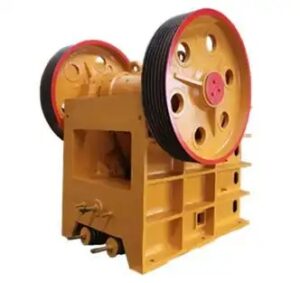
A Jaw Crusher, commonly referred to as a rock jaw crusher or stone jaw crusher, is a primary crushing machine used extensively in mining, quarrying, and aggregate production. It is designed to crush large, hard rocks and ores into smaller, manageable sizes for further processing. Its robust construction and efficient crushing mechanism make it an indispensable piece of equipment in the material reduction industry.
What Rocks Can a Jaw Crusher Crush?
Jaw crushers are highly versatile and capable of crushing a wide variety of rocks and minerals with compressive strength typically up to 320 MPa. Common materials include:
Granite: Extremely hard and abrasive.
Basalt: Dense and tough volcanic rock.
Quartzite: Very hard metamorphic rock.
Limestone: Softer sedimentary rock, but can be abrasive.
Sandstone: Varies in hardness and abrasiveness.
Iron Ore, Copper Ore, and other metallic ores.
Concrete and Construction Demolition Debris.
Its ability to handle hard, abrasive, and mixed materials makes it a go-to primary crusher
Features and Advantages of Jaw Crushers
Key Features:
Robust Frame: Heavy-duty construction for durability.
Crushing Chamber: Deep symmetrical chamber for high capacity and reduced wear.
Adjustable Discharge Setting: Hydraulic or mechanical adjustment for precise product size control.
Safety Mechanisms: Toggle plate acts as a safety device against uncrushable material.
Major Advantages:
High Efficiency & Productivity: Powerful crushing motion delivers high output.
Reliability & Low Maintenance: Simple design with fewer moving parts minimizes downtime.
Versatility: Effective for a vast range of materials and applications.
Cost-Effectiveness: Low operational and maintenance costs per ton of material crushed.
Easy Installation and Operation: Straightforward setup and user-friendly controls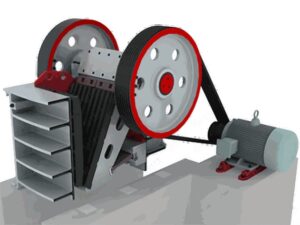
Working Principle of a Jaw Crusher
The working principle is based on compressive force. The machine consists of two jaws: a fixed vertical jaw and a movable inclined jaw. They form a V-shaped crushing chamber. The movable jaw moves in an elliptical motion towards the fixed jaw, created by an eccentric shaft. As the rock enters the top of the chamber, it is compressed between the jaws. The material is progressively crushed until it becomes small enough to pass through the bottom opening (discharge setting). The cyclical motion continuously feeds and crushes material.
Feed Size and Output Size Ranges
Feed Size : Typically, jaw crushers can accept rocks up to 80-85% of the crusher feed opening width. For large primary crushers, this can mean accepting boulders up to 1 meter (40 inches) or more in diameter. The maximum feed size is model-dependent.
Output/Product Size : The final product size is adjustable by changing the discharge setting (the gap between the jaws at their lowest point). Common output sizes range from as fine as 20 mm (0.8 in) to 150 mm (6 in) for primary crushing. The specific range depends on the crusher model, cavity design, and material properties.
How to Improve Production Efficiency?
Optimal Feed: Ensure consistent, well-sized feed material free of fines. Use a pre-screening grizzly to remove undersize material
Correct Feed Rate: Avoid overfilling the chamber (choke feeding) or underfeeding. Maintain a steady, level flow of material.
Proper Jaw Die Selection: Choose the right jaw plate (die) profile (e.g., straight, curved) and material for your specific rock type to maximize throughput and wear life.
Optimal Speed & Stroke: Operate the crusher at the manufacturer’s recommended eccentric shaft speed and stroke for the intended material.
Regular Maintenance: Keep up with lubrication, tightening of bolts, and inspection of wear parts to prevent unexpected failures.
How to Select the Right Jaw Crusher?
Material Characteristics: Determine the hardness, abrasiveness, moisture content, and maximum feed size of your rock.
Production Requirements: Calculate the required Tons Per Hour (TPH) capacity and the desired final product size(s).
Feed Opening Size: Ensure the crusher’s feed opening is large enough to accept your largest rocks.
Power Source: Choose between electric or diesel drive based on your site conditions and mobility needs.
Mobility: Decide between a stationary plant (for fixed locations) or a mobile jaw crusher (for multiple sites or on-site crushing).
Brand and After-Sales Service: Select a reputable manufacturer that offers reliable spare parts supply and technical support.
In conclusion, a jaw crusher rock crusher is a fundamental, efficient, and cost-effective solution for primary rock crushing. Understanding its capabilities, operation, and selection criteria is key to maximizing profitability and productivity in your aggregate or mining operation.