How Does a Jaw Crusher Work? Understanding the Crushing Process
The jaw crusher is a primary crushing workhorse in mining, quarrying, and recycling industries. But have you ever stopped to ask, “How does a jaw crusher work?” This comprehensive guide breaks down the working principle, process, and critical components of this essential piece of rock crushing equipment.
The Core Working Principle: Compression is Key
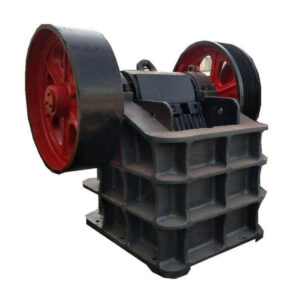
At its heart, a jaw crusher operates on a simple but powerful principle: compression. It uses two vertical jaw plates, one fixed and one moving, to crush materials between them, much like a nutcracker. The immense pressure applied fractures the rocks into smaller, usable pieces.
The Step-by-Step Jaw Crusher Working Process
Here’s a detailed look at the crushing process from feed to discharge:
Feed Hopper: The process begins when large rocks (feed material) are loaded into the feed hopper. This material gravity-feeds into the crushing chamber located between the two jaw plates.
Fixed Jaw Plate: This is the stationary surface against which the rock is crushed. It does not move and forms one side of the crushing chamber.
Movable Jaw Plate: This is the active component. It is mounted on an eccentric shaft that creates an elliptical motion. As the shaft rotates, the movable jaw plate moves back and forth towards and away from the fixed jaw plate.
The Crushing Stroke (Compression): As the movable jaw moves towards the fixed jaw, the space between the two plates decreases. This action compresses the trapped rock, applying immense pressure until it fractures and breaks.
The Return Stroke (Discharge): When the movable jaw moves away from the fixed jaw, the space opens up. The now smaller crushed material falls downward by gravity. The size of the crushed product is determined by the gap between the jaws at their closest point, known as the Closed Side Setting (CSS).
Discharge Chute: The crushed material exits the chamber through the bottom discharge chute, ready for the next stage in the crushing and screening circuit.
This cycle repeats continuously at high speed, allowing for efficient and high-volume reduction of hard materials.
What Materials Can a Jaw Crusher Break?
Jaw crushers are incredibly versatile and can handle a wide range of hard and abrasive materials, including:
Granite and Basalt (Hard rock)
Limestone and Dolomite (Abrasive rock)
Concrete and Reinforced Concrete (Recycling)
Iron Ore, Copper Ore, and other minerals (Mining)
River Gravel and Quarry Run
They are designed as primary crushers, meaning they are the first machine to receive raw material directly from the blast site or face.
Key Industries That Rely on Jaw Crushers
Mining: For primary crushing of run-of-mine ore.
Quarrying: To produce aggregate (crushed stone, sand, and gravel) for construction.
Construction & Demolition (C&D) Recycling: To break down concrete, bricks, and asphalt for reuse.
Aggregate Processing: In stationary and mobile crusher plants for producing various sizes of aggregate.
The Role of Key Jaw Crusher Parts in the Working Process
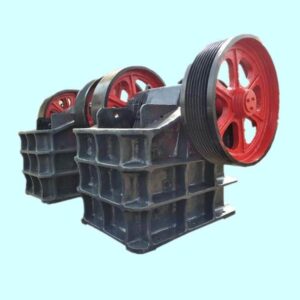
Every component in a jaw crusher plays a vital role. Understanding the function of these crusher wear parts is crucial for operation and maintenance.
Jaw Plates / Jaw Dies: These are the essential crusher wear parts that directly contact and crush the material. They are typically made from manganese steel for superior abrasion resistance. The fixed jaw plate and movable jaw plate work in tandem to perform the crushing action.
Eccentric Shaft: This is the “engine” of the movable jaw. Its unique off-center rotation creates the reciprocating motion that drives the crushing cycle.
Toggle Plate: This is a critical safety component. It acts as a sacrificial link. If an uncrushable object (like tramp iron) enters the chamber, the toggle plate is designed to break first, preventing more serious damage to the crusher itself.
Flywheel & V-Belt Pulley: The flywheel stores energy, helping to maintain momentum during the crushing cycle and ensuring smooth operation. The V-Belt Pulley transfers power from the electric motor to the crusher’s drive mechanism.
Tension Rod & Spring: This assembly maintains pressure on the toggle plate and ensures the movable jaw is held tightly in position, contributing to a consistent product size.