mini jaw rock crusher
What is a Mini Jaw Rock Crusher? Your Ultimate Compact Crushing Guide
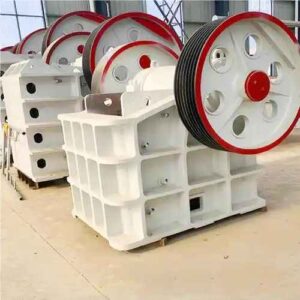
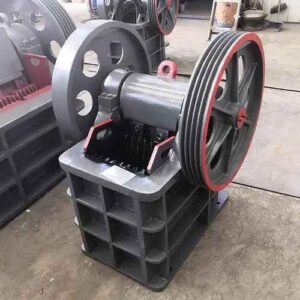
A Mini Jaw Rock Crusher is a compact, mobile, and highly efficient primary crushing machine designed to reduce medium-sized rocks, stones, and concrete into smaller, uniform gravel or aggregate. As the name suggests, it’s a downsized version of the larger, stationary jaw crushers commonly seen in massive quarry operations. Its small footprint, ease of transportation, and lower cost make it the ideal crushing solution for small to medium-scale projects, on-site recycling, and remote locations.
How Does a Mini Jaw Rock Crusher Work?
The operating principle of a mini jaw crusher is straightforward and robust, based on the powerful “crushing chamber” concept. It features two hardened jaw plates: one fixed jaw and one movable jaw. The movable jaw is mounted on an eccentric shaft and moves in an elliptical motion.
Feed Phase: Material is loaded into the crusher’s chamber from the top.
Crushing Phase: As the movable jaw moves towards the fixed jaw, it compresses the trapped rock against the stationary plate, breaking it by mechanical force.
Discharge Phase: On the return stroke, the gap between the jaws opens, allowing the crushed material to gravity-feed downwards. This cycle repeats continuously as new material enters, and the processed aggregate exits at the bottom, sized according to the adjustable gap setting.
Key Features and Advantages of Mini Jaw Crushers
Compact Size & Mobility: Easily towed by a pickup truck or mounted on a trailer. Perfect for confined job sites.
Low Operational Cost: Consumes less power and is mechanically simpler than larger counterparts, reducing fuel and maintenance expenses.
Ease of Use and Maintenance: Simple mechanical design allows for easy operation and straightforward part replacement (like jaw plates).
Versatility: Can crush a wide variety of hard materials. Jaw gap adjustment enables control over final product size.
On-Site Crushing: Eliminates the need to transport materials to a distant processing plant, saving time and logistics costs.
Materials Crushed and Primary Applications
Materials Crushed:
Hard rock (granite, basalt, quartz)
Construction concrete and demolition debris
Bricks and construction waste
Recycled asphalt pavement (RAP)
Slag and cinder blocks
Key Industries & Applications:
Small-scale Mining & Exploration: Sampling and small production runs.
Construction & Demolition (C&D): On-site recycling of concrete and rubble for use as base material.
Landscaping & Agriculture: Creating gravel for pathways, drainage, or soil improvement.
Recycling Centers: Processing specific streams of hard waste.
DIY & Hobbyists: For specialized projects requiring custom aggregate.
Distinctive Features and Advantages of Small Aggregate Crushers
Selection Guide for Customers:
Input Material: Identify the hardness and size of your raw material.
Required Output Size: Determine the desired final product size.
Production Needs: Estimate your required hourly or daily output (tons per hour).
Power Source: Choose between diesel engine (mobile, remote sites) or electric motor (fixed, with power access).
Portability: Consider weight and dimensions if frequent moving is needed.
After-Sales Support: Ensure availability of wear parts (jaw plates) and technical service.
Key Specifications:
Feed Opening Size Range: Typically from 4″x6″ (100×150 mm) up to 10″x16″ (250×400 mm) or slightly larger for “mini” class crushers.
Production Capacity Range: Varies widely from 0.5 to 20 tons per hour, depending on model, material hardness, and discharge setting.
Discharge Adjustment: Mechanical shim or hydraulic adjustment, usually ranging from 0.5″ to 3″ (15-80 mm).
Frequently Asked Questions (FAQ)
Q1: Can a mini jaw crusher handle reinforced concrete?
A: Yes, but with caution. Small rebar can be processed, but large, tangled reinforcement steel should be removed first to avoid damaging the machine.
Q2: What is the main maintenance task?
A: Regular lubrication of bearings and periodic inspection/replacement of the jaw plates and toggle plate are the most critical maintenance tasks to ensure longevity.
Q3: Is it possible to get a completely uniform product size?
A: Jaw crushers produce a slightly graded product with some variation (cubical to flaky). For very precise sizing, a secondary screen or a different type of crusher (like a cone crusher) may be needed.
Q4: Are these crushers safe to operate?
A: Safety is paramount. Always follow the manufacturer’s manual. Key precautions include using proper personal protective equipment (PPE), ensuring no one is near the machine during operation, and never attempting to clear a jam while the machine is running.